
Should the arrow not be with you at all times, evil will begin to trouble you. Men will come to be the hungriest of ghosts, while women will become silenced mermaids.
– Mikoto Shimabukuro, in Gosho Aoyama, Meitantei Conan, ‘The Mermaid’s Curse Case’, 2000.
This article serves as a primer analysis on Paranormasight: The Mermaid’s Curse, and will be followed by a more comprehensive study of the duology in an upcoming video essay. Mild thematical spoilers below.
Under Gen Kobayashi’s wide strokes, faces appear contorted and uneasy. Smiles and glances always hide complex emotions and unspeakable secrets, before they burst frighteningly. It is obvious that something is stirring beneath the surface, but is there really anything better one can do except smile politely?
Ise and the travelling detective
After having explored the folklore surrounding the Sumida River, Paranormasight decides to leave the capital behind and travel westwards to the Ise Bay in Mie Prefecture. With spring barely around the corner at the time of release, The Mermaid’s Curse wants to be a summer adventure, set right before Ōbon, when the boundary between the world of the living and the world of the dead dissolves. Just after the Storyteller presents the setting, the first scene shows Yuza and Azami in the middle of the ocean, ready to dive into the water. The son of an ama, the name given to traditional women pearl divers, Yuza has decided to follow in his mother’s footsteps, despite the objections of the villagers. Not because he is a man, despite what one might think, but because his past is intimately linked to a tragedy that struck Kameshima Island, five years earlier.
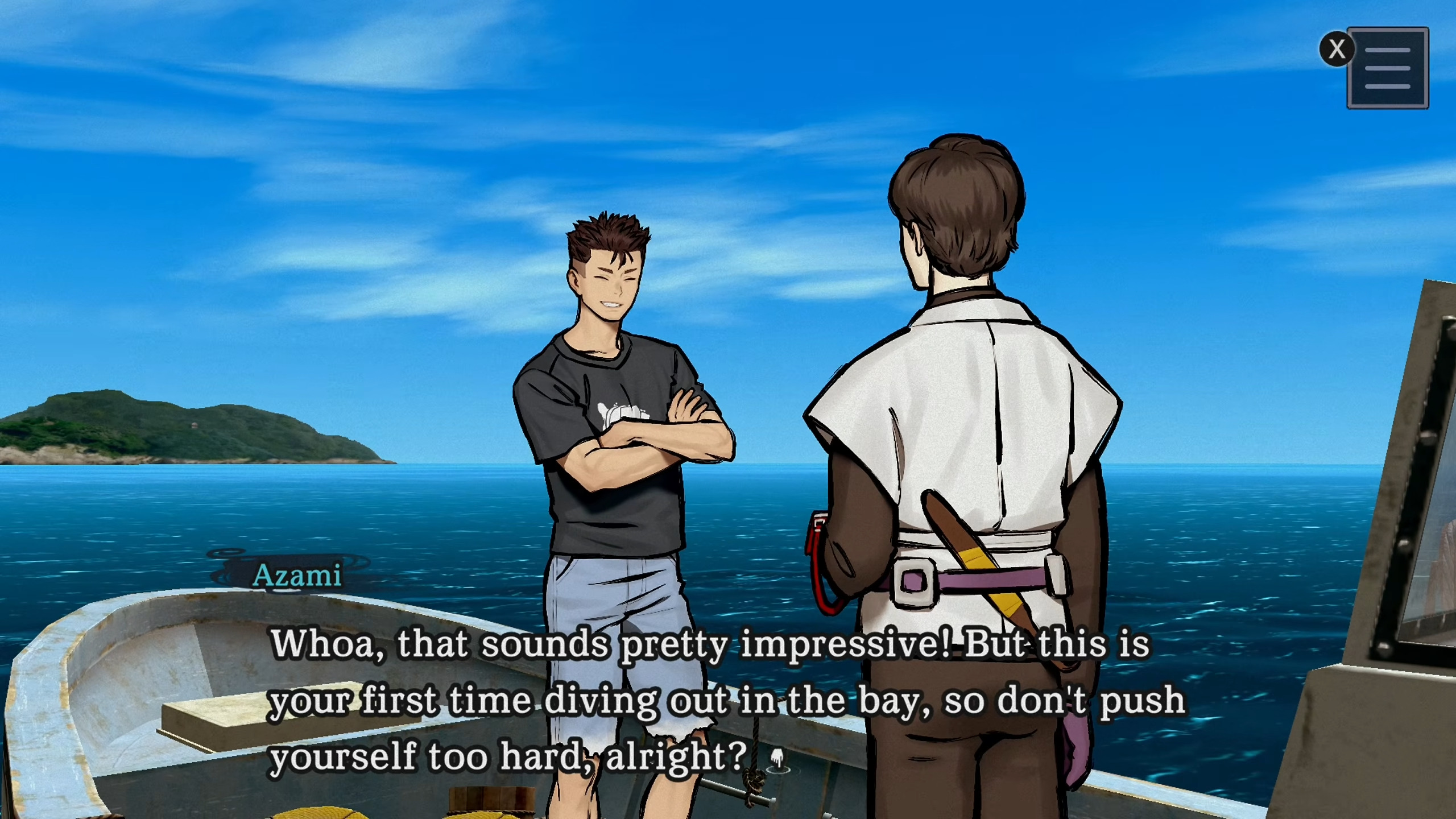
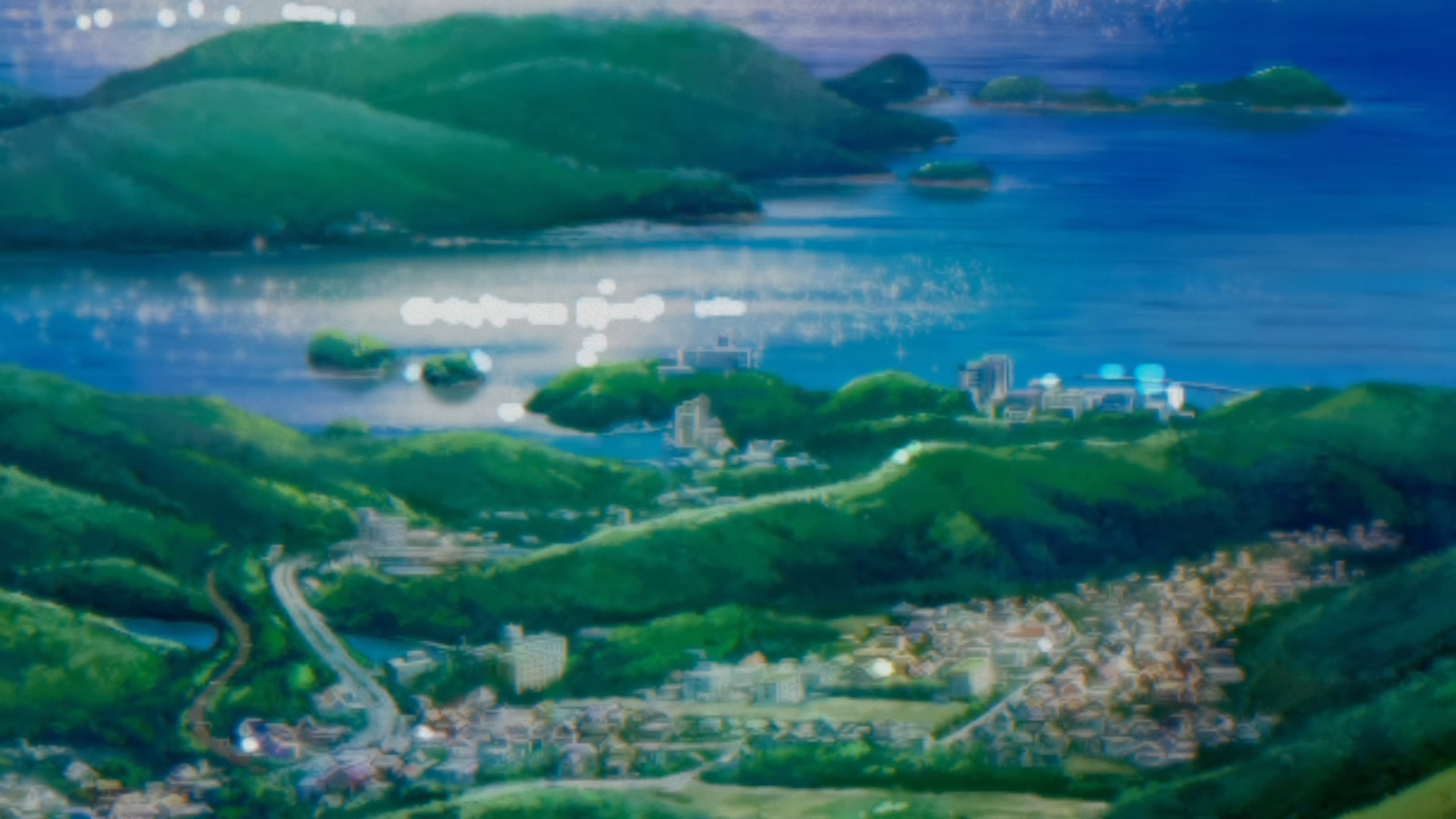
The landscape is sublime. Perhaps even more so than in the first game, The Mermaid’s Curse boasts real photographs, slightly modified to fit the scorching summer aesthetic of the story. This is reminiscent of a historical tradition in visual novels, particularly found with 07th Expansion games. After all, this entry of Paranormasight tackles a similar coming-of-age story set in the periphery of Japan. The Mermaid’s Curse is a tale of escapism, riding the well-known genre of travelling detective stories. This is a important tradition of Japanese detective fiction, represented by Kyōtarō Nishimura and his detectives who travel across Japan by train, but also with the Mystery Tours and films of Meitantei Conan, which are annual cultural promotions for different cities and prefectures. Not to mention the suspense dramas (2時間サスペンス) that feature a different setting every week. Compared to the claustrophobic, nocturnal Sumida Ward of The Seven Mysteries of Honjo (2023), The Mermaid’s Curse shows a surprising diversity of scenes, alternating between promontories overlooking the sea, quiet alleyways and picturesque patches of nature.
This is hardly surprising, given that The Mermaid’s Curse boasts itself as an inverse rewriting of Yukio Mishima’s The Sound of Waves (潮騒, 1954). The setting is the same, as is the main storyline, except that Yuza and Sato have, in a way, reversed the roles of Shinji and Hatsue. The novel is a classic of Japanese romance stories, and it is amusing to see iconic locations reappear here. The security post is once again a place where hearts are united, while the lighthouse, the crossroad with the clock tower, and the torii gate leading to the Yatsushiro Shrine also make notable appearances. But the game divides its time between the island and the mainland. While the young protagonists stay mainly on Kameshima, the adults investigate near the cities of Ise and Tsu, remaining on the island only in the final act to solve the double mystery that hangs over Kameshima.
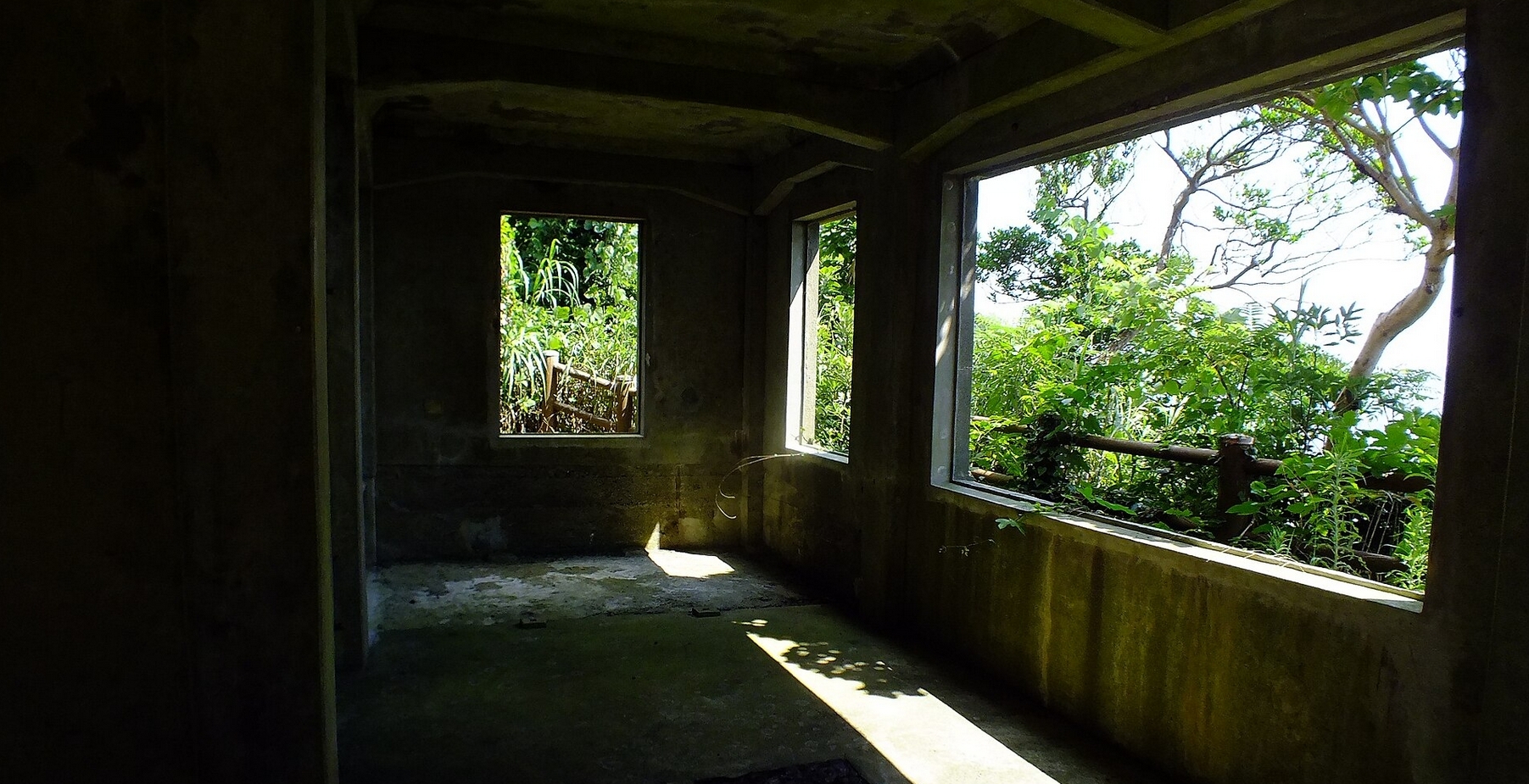
Such an exotic and refreshing investigation is almost single-handedly embodied by Barnum Arnav. His lust for romance is oddly funny, but it offers enough space for the player to enjoy everything that is not associated with curses. For Circe and other characters, what strikes Kameshima is almost like any other Monday job. Of course, the worst must be prevented from happening, but that does not stop them from enjoying the scenery and discovering an unfamiliar culture – and after all, that is the objective of the game, given that Mie Prefecture, despite the reputation of the Ise Great Shrine, is one of the least visited prefectures in Japan. The Sound of Waves was itself a rewriting of Longus’ Daphnis and Chloe (2nd century). Both novels opened with a description of the countryside and portrayed it as a more desirable place than the city, although they never fell into naive romanticism [1]. The Mermaid’s Curse follows the same approach but with a modern twist that respects both the historical significance of the region, thanks to a well-researched encyclopaedia, and the fact that society is changing, and things are no longer the same.
And Then There Were Mermaids
Speaking of which, the title continues its series of intertextual references with perhaps one of the most prominent references in the dozen hours of gameplay. It is clear from the outset that the quest for immortality is a reference to Karasuma Renya from Meitantei Conan, and it does not take long to realise that the game pays a vibrant homage to the mystery of the Mermaids’ Island (we find the same discussion about dental records…), published in 2000, and undoubtedly one of the iconic cases of the series. However, it is not a carbon copy, as Paranormasight immediately accepts the supernatural premise. Thus, the mystery is not so much about who is pretending to be a mermaid or an immortal, but rather about understanding the motives behind their actions and their connections to the land.
As I mentioned earlier, The Mermaid’s Curse borrows the structure of The Sound of Waves, and this is the game’s greatest strength. The title manages to weave together a coherent and elegant network of cultural references. Classical literature and history – with the old mermaid legends and the Heike monogatari (14th century) – intersect with modern myths. The characters’ obsession with immortality and the role of the zaibatsu, Japan’s huge financial conglomerates, echo recent developments in Meitantei Conan, blending historical traditions with modern economic considerations.

Thus, Kameshima is not a place frozen in time. It is a dynamic island suffering from the decline of the peripheries in favour of Tokyo. In fact, unlike The Sound of Waves, where the island serves as a representation of traditional Japan, The Mermaid’s Curse rejects this static representation. Kameshima is a place of traditions, but also something that feels archaic to some of the young generation who have grown up with urban pop culture. It is also something that needs to be saved by restructuring the lagging economic around tourism. The game only touches on the topic peripherally, but the ama are disappearing, decimated by environmental degradation and a lack of new recruits [2]. In a way, this is why Chie’s opposition to Yuza is not based on gender, because although his choice of activity is subversive, he would be welcome to help perpetuate a long tradition, if not for his family history. The diving mini-game, with its idyllic colours, also serves to pay tribute to a precious culture and the beauty of the underwater world, a true environmental ode reminiscent of Aquanaut no kyūjitsu (1995) or Forever Blue (2007).
The Mermaid’s Curse is therefore part of Ise’s cultural tradition. It cannot be overemphasised how much Ise Great Shrine was a cornerstone of pre-war state Shintō. As the place where the sun goddess Amaterasu was enshrined, Ise was both a relay for her presence on Earth, and a conduit for her power to the emperor, thus the epitome of imperial nationalism. And yet, things have changed significantly today, as Ise is hardly ever visited by right-wing politicians, unlike the Yasukuni Shrine.
Yasukuni and far-right nationalism
Visits to Yasukuni are a salient point in Japanese right-wing rhetoric [3], as war victims are buried there, including a thousand people convicted of war crimes by the International Military Tribunal for the Far East – eleven of them for Class A crimes. Such visits are generally avoided because they are strongly criticised by the Japanese left and seriously damage Japan’s relations with its neighbours. Yet some prime ministers have made them a political statement. While Yasuhiro Nakasone never repeated his 1985 visit after strong protests from China, Junichiro Koizumi made is a regular feature of his term in office, and Shinzō Abe attempted to do so again in 2013.
Recently, the newly-elected Prime Minister Sanae Takaichi, well-known for her historical revisionism regarding Japanese war crimes, has once again raised the idea of visiting the shrine [4]. Her landslide victory in the 2026 elections may have emboldened her enough to put the ultranationalist issue back on the table…
In truth, the Ise Shrine has been rehabilitated since the late 1950s as an object of aesthetic and historical appreciation, detached from the pre-war state Shintō. By rejecting its recent connotations, the shrine has once again become a bridge between nature and culture, evoking Japan’s ancient, even mythological, history [5]. The efforts of this new cultural policy do not stop at the Ise Shrine, but embrace the entire region. In 2025, the Iseshima Connect Project was launched to build connections between different aspects of local culture with the aim of promoting tourism on the peninsula. The shrine is working closely with fishermen, artisans and local businesses to promote a unique culture. The goal is to write an interconnected and coherent history of Ise-Shima, at the crossroads between society and nature [6].
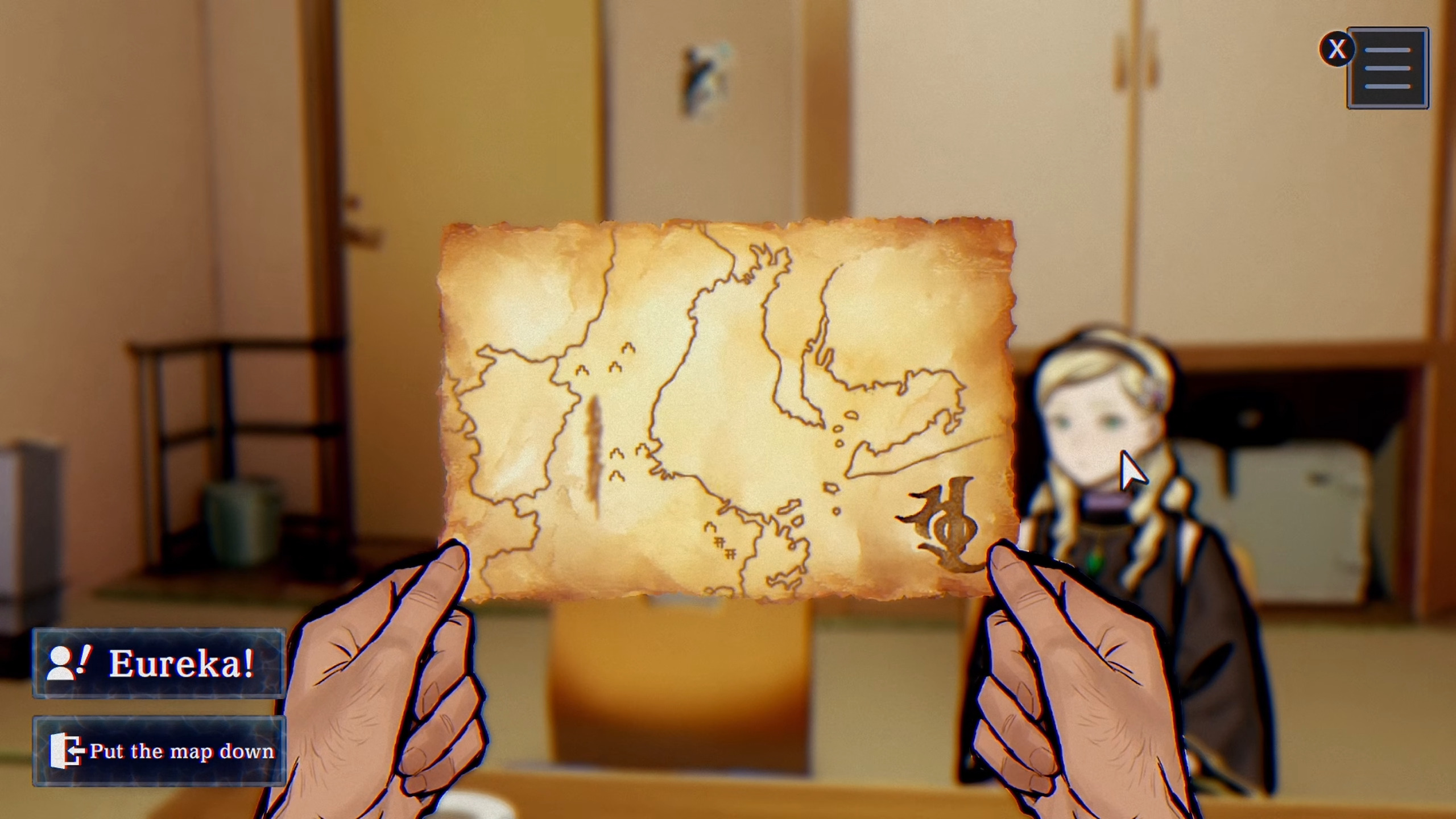
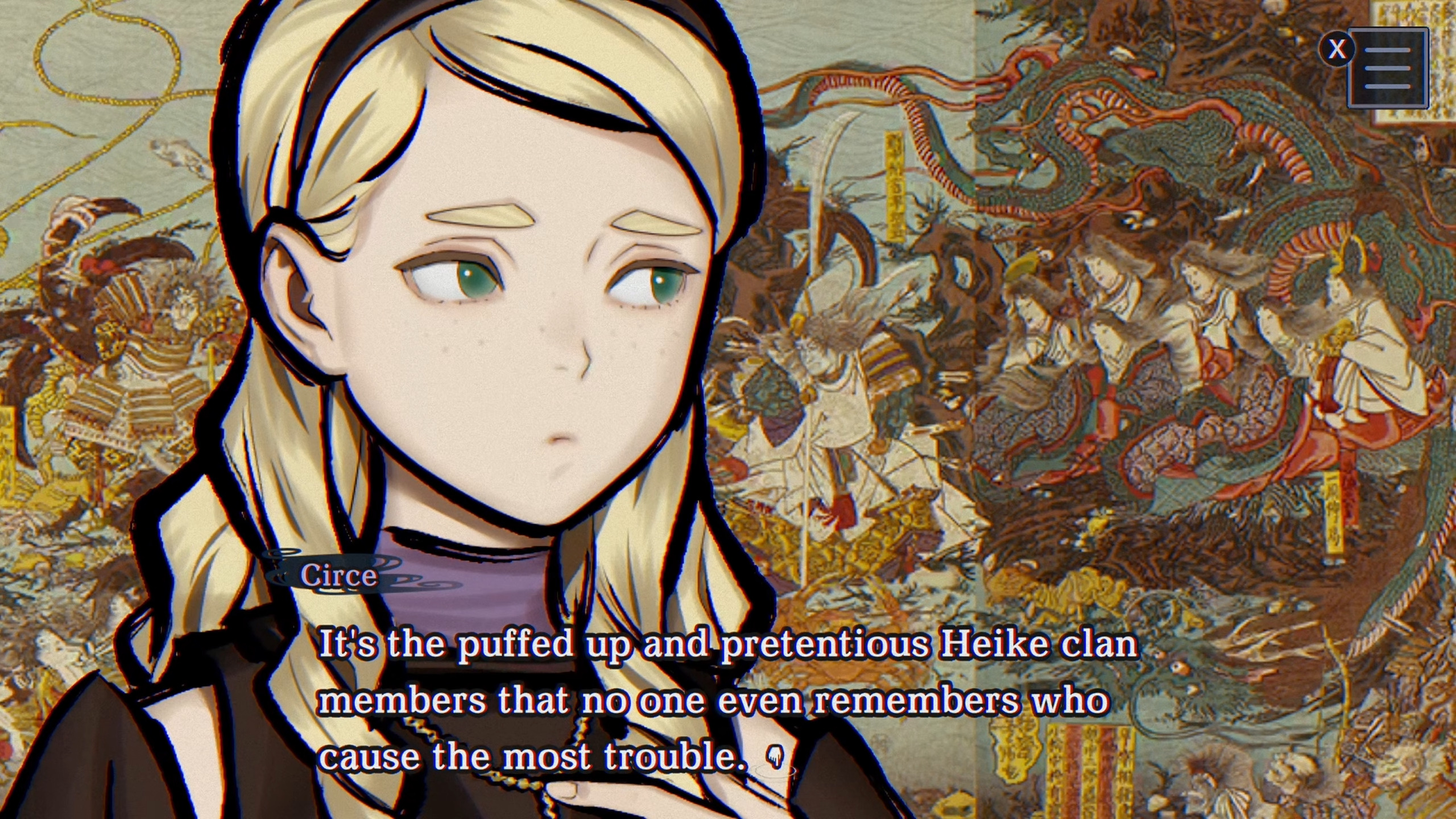
This is precisely what The Mermaid’s Curse aims to do. The culture of ama divers, mermaid myths and the story of the Heike clan intertwine in a plot that places folklore stories in the context of a modern, industrialised Japan. This is reminiscent of Retro Mystery Club Vol.1: The Ise-Shima Case (2019), which used the region’s pearls as the cornerstone of its mystery to push its protagonists to travel from Tokyo to Ise-Shima, not unlike the plot of Hokkaidō rensa satsujin (1984). Here, mermaids serve as gateways to understand the Ise Bay against the backdrop of modernity. They remain, in any era, a subject of fascination.
Women agency and gender explorations
But The Mermaid’s Curse is above all a modern game, and does not shy away from delivering its social message. The Seven Mysteries of Honjo already gave the centre stage to women characters, and this instalment continues the trend. The four women who make up the main cast are once again marginalised individuals, at least compared to traditional expectations. Sato is a teenager whose tall stature is strange to others, Tsukasa is the visual archetype of the provincial and tomboy girl, and Circe is a mysterious foreigner in odd-looking clothes. Even Yumeko, the housewife who should represent a traditional feminine ideal (yamato nadeshiko), turns out to tbe a proactive and efficient detective, representing central power with mannerisms more commonly found in traditional male characters (her animations are very much reminiscent of Kōsuke Kindaichi…). Even more so than Harue in the first game, Yumeko is witty and subtly charismatic. Better still, she fully takes initiative and relentlessly drives the action of the story.
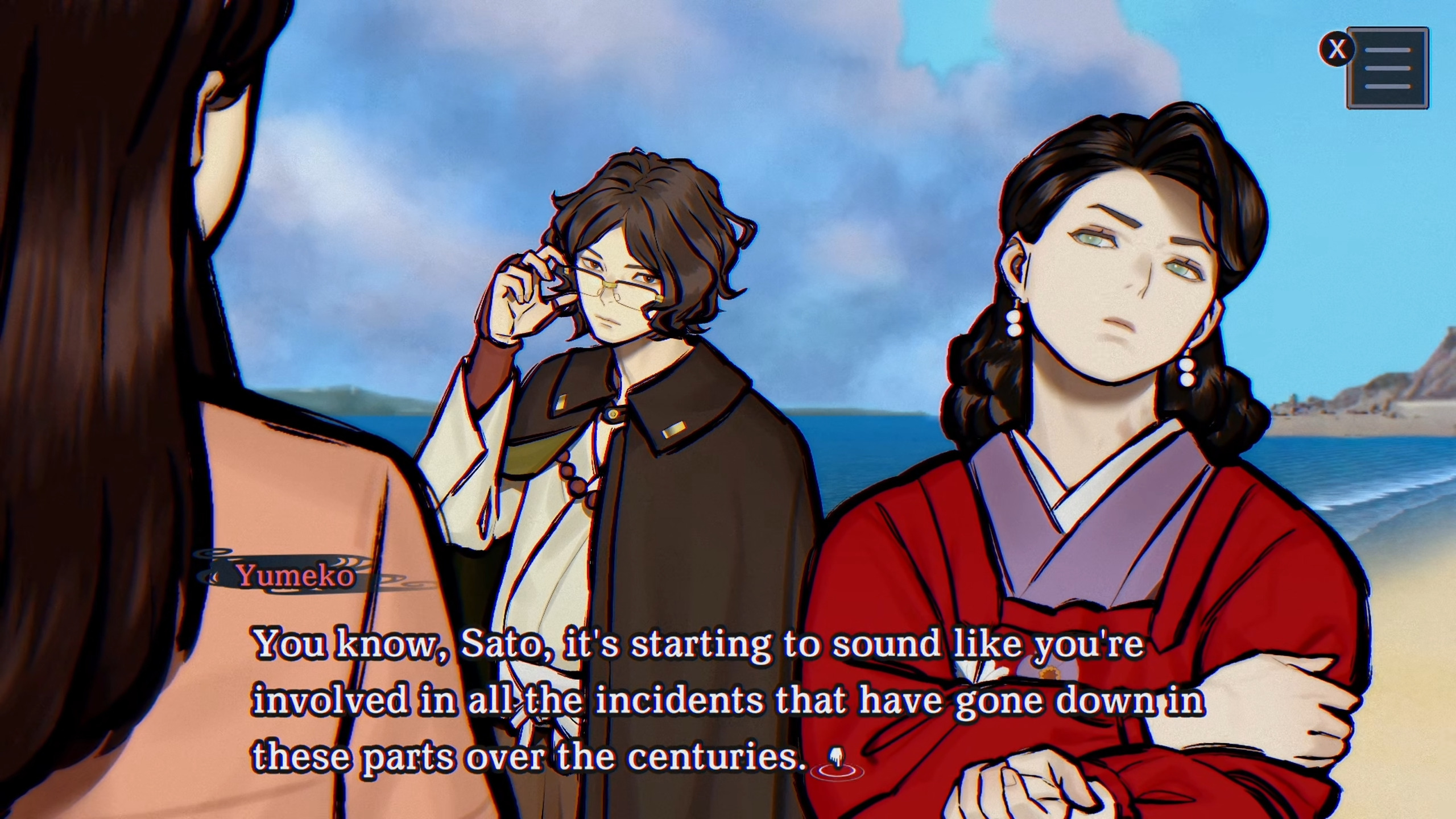
The foil of this more assertive femininity is the fragility of masculinity in the game. Sodo is Yumeko’s assistant, in a reversal of the traditional Holmesian premise. Avi, like Richter in the first title, is chaotic and provides comic relief to Circe, the brains and encyclopaedia of the pair. As for Yuza and Azami, their homosociality is of a rare depth, as they closely follow the BL archetypes of seme and uke. Yuza immediately appears effeminate due to his design and his choice to become an ama – which the game reinforces by refusing to use the 海人 kanji rather than 海女 – while Azami is proactive, yet shows rare sensitivity towards those close to him.
Queerbaiting?
I have read several times that The Mermaid’s Curse promotes compulsory heterosexuality or is cowardly because of its ending. This is understandable, and I would have loved to see Yuza and Azami end up together, but I think this interpretation also misses the fact that the game is not subtle about being a rewriting of The Sound of Waves, as the scenes are so similar. The final romance was foreshadowed from the moment Sato appeared and Kamishima was chosen as the setting. Also, I believe that homosociality is still a homoeroticism, which the game reminds us several times, both with Yuza and Mare…
It seems to me that The Mermaid’s Curse echoes Miyuki Miyabe’s All She Was Worth (火車, 1992). Not because of the modus operandi of the crime – and I will refrain from revealing what makes the early mystery so intriguing – but rather because Miyabe was more interested in the second part of her novel, in describing Tokyo and the socio-economic conditions that drove the culprit to commit their crime [7]. The same is true in Paranormasight. The reasons behind the bloody tragedy in Kameshima are found in the destruction of solidarity and the sense of belonging among a disillusioned youth. And as in All She Was Worth, the characters (Circe, Tsuyu, Sodo, etc.) indulge in long monologues about local culture, because they shed light on what, to a certain extent, constitutes the essence of the region and the curses.
The game always opposes a quiet stagnation. Switching between protagonists and seeing them collaborate so openly is a rejection of the fatalist and declinist discourse of Japan’s peripherical regions. Of course, it is clear that Kameshima is suffering from depopulation and an ageing population, with younger people deciding to leave for the city, or even the capital. For Kikuko, leaving the island was a dream, but her hopes were dahsed when she realised that an office lady does nothing but serve tea and hand out documents. On Kameshima, she can dive and showcase her physical prowess, a core part of her feminine identity. So when Azami – who often goes to communal meetings – and the other teenagers talk about doing something for the island, it is about accepting its past and history, its problems and its fear of strangers, in order to propel it into the future. Things will change, of course, but the community will remain united. Fishing and television continue to connect generations, and one can only hope that Kameshima will prosper. Differently – since old patriarchs have given way to young people and women – but prosper nonetheless.
Dissoving the past, embracing the present
This sense of transition and forward-looking perspective is also evident in the narrative structure of The Mermaid’s Curse and its relationship to the detective genre. To simplify our interpretation, suffice to say that Japanese detective stories are always caught between orthodoxy (honkaku) and heterodoxy (henkaku). The actual meanings of those labels have changed over time, and it is not possible to constrain the genres into overly rigid categories. However, it should be noted that recent honkaku – roughly since the 1950s – has been marked by the idea that detective stories are built around a deductive game in which the reader is invited. In the 1990s, as a reaction to the social school of detective novels (社会派小説) that emphasised motives, the shin-honkaku genre exploded in popularity.

This was a radical shift in detective fiction, with a return to fair mysteries, but steeped in eccentric stratagems, complex plans and far-fetched premises. But logic reigned supreme and the solutions were always elegant. Conversely, the motives were secondary. Despite the supernatural premise (which is not inconsistent with the ethos of shin-honkaku, as long as the logic is sound), The Mermaid’s Curse borrows many elements from the genre. We find the figure of the atypical detective, an amateur with remarkable intelligence, in Yumeko. Because she remains on the peninsula for the entire first half of the game, she echoes the detectives who reopen old mysteries (both the curse and the series of murders in the past) on far islands, not unlike the ones in The Decagon House Murders (十角館の殺人, 1987).
Avi represents the almost pulp detective with his treasure hunt, while the teenagers on the island resemble the protagonists of Higurashi no naku koro ni. This crossover between genres is not new. It is a characteristic feature of modern Japanese detective stories. After all, despite its crises, shin-honkaku became the dominant genre in the 1990s and 2000s, so much so that an entire generation of authors grew up with it. While we are seeing a return of the social fiction, let’s only mention Keigo Higashino, the pleasure of deduction has not disappeared. Video games have followed with the renaissance of ADV games. Famicom Detective Club: Emio (2024) fully embraces the hybrid nature with an elegant mystery of remarkable simplicity, while placing great emphasis on the social motive – the game concludes with a twenty-five-minute animated short devoted to the story of the culprit.

The Mermaid’s Curse cleverly blends all these influences too. The hours tick by as we follow sharply intelligent characters, each a detective in their own way, as they attempt to solve a problem that is above all else social. Avi’s conscience is torn by his actions, but these can only be understood by looking back at the history of each inhabitant of the region. The mystery to be unravelled highlights the discomfort of Japanese society, where the breakdown of the social contract leads to the unthinkable. Kameshima, like the rest of Japan, is steeped in latent misogyny, and it is what drives people to murder, in different ways. For the protagonists, it is about the future and how to prevent a tragedy from happening again – the lingering curse in one of the bad endings implies so.
It is clear that Paranormasight is steeped in a sincere love for a bygone era. The 1980s, at the height of the economic bubble, are a prime target for modern Shōwa retro. The game adores the pop culture of that period, with Sato repeatedly mentioning her fondness for the two-hour suspense dramas, an iconic moment of Japanese television. But The Mermaid’s Curse never shies away from the human side of things, the inequalities, and difficulties of growing up in this constantly changing era. The road is difficult, but together, it is worth travelling. The characters’ wishes are sent into the future, to 2026 and beyond, along with the hope for a more just society where love and solidarity would prevail, where no one would be unhappy enough to bring new curses to existence.
The Mermaid’s Curse is at the crossroads of important messages repeated in popular detective fiction. ‘It’s because life is so short that it has meaning,’ Heiji said in the Mermaids’ Island case. Yes, but ‘without love, it cannot be seen,’ replied Umineko no naku koro ni (2007-2010), another proponent of social shin-honkaku after Meitantei Conan. For Paranormasight, both can be true at the same time. When reading Japanese folk stories, one may be surprised by their laconic nature. It seems almost absurd that people would follow fantastical creatures or put their lives in such danger. Like Emio, The Mermaid’s Curse is both a synthesis and a proposal. With its camera at character height, the game relentlessly humanises its cast, who in turn write their own legend. Yumeko has an interesting place here. She should represent the uncompromising gaze of the detective and central authority. Yet the heart sometimes prevails. And that is all that matters.
Open to others.
Live together.
Please, live happily.
[1] David Vernon, Exquisite Nothingness: The Novels of Yukio Mishima, Endellion Press, 2025, pp. 126-127;
[2] Mainichi Shimbun,「海女文化、三重で存亡の危機 漁獲減り後継者不足」, 30 March 2023;
[3] Daiki Shibuichi, ‘The Yasukuni Shrine Dispute and the Politics of Identity in Japan: Why All the Fuss?’, in Asian Review, vol. 45, no. 2, 2005, pp. 197-215;
[4] Nikkei, 「高市早苗首相、靖国神社への参拝環境整えるため努力」, 8 February 2026;
[5] Noboru Kawazoe’s rhetoric thus presents Ise as the embodiment of the relationship between the emperor and the divine world, but in a consubstantial manner. In Ise: Nihon kenchiku no genkei (1962), he seeks to demonstrate, with Kenzo Tange, that Ise is primarily linked to folklore and was the pillar of a popular religion. They thus seek to ‘absolve Ise of any responsibility for its role in prewar State Shintō by casting that as relatively less important than Ise’s real significance as Japan’s basso continuo’ (Tze M. Loo, ‘Escaping its past: recasting the Grand Shrine of Ise’, in Inter-Asia Cultural Studies, vol. 11, no. 3, 2010, p. 383);
[6] Ise-Shima Tourism Convention Organization, 「高付加価値なインバウンド誘致と、持続的な観光地づくりをめざす「iseshima connect プロジェクト」 異業種も交えた延べ224人の地域事業者が参加」, on prtimes.jp, 5 February 2026;
[7] Amanda C. Seaman, Bodies of Evidence: Women, Society, and Detective Fiction in 1990s Japan, University of Hawai’i Press, 2004, pp. 26-56.